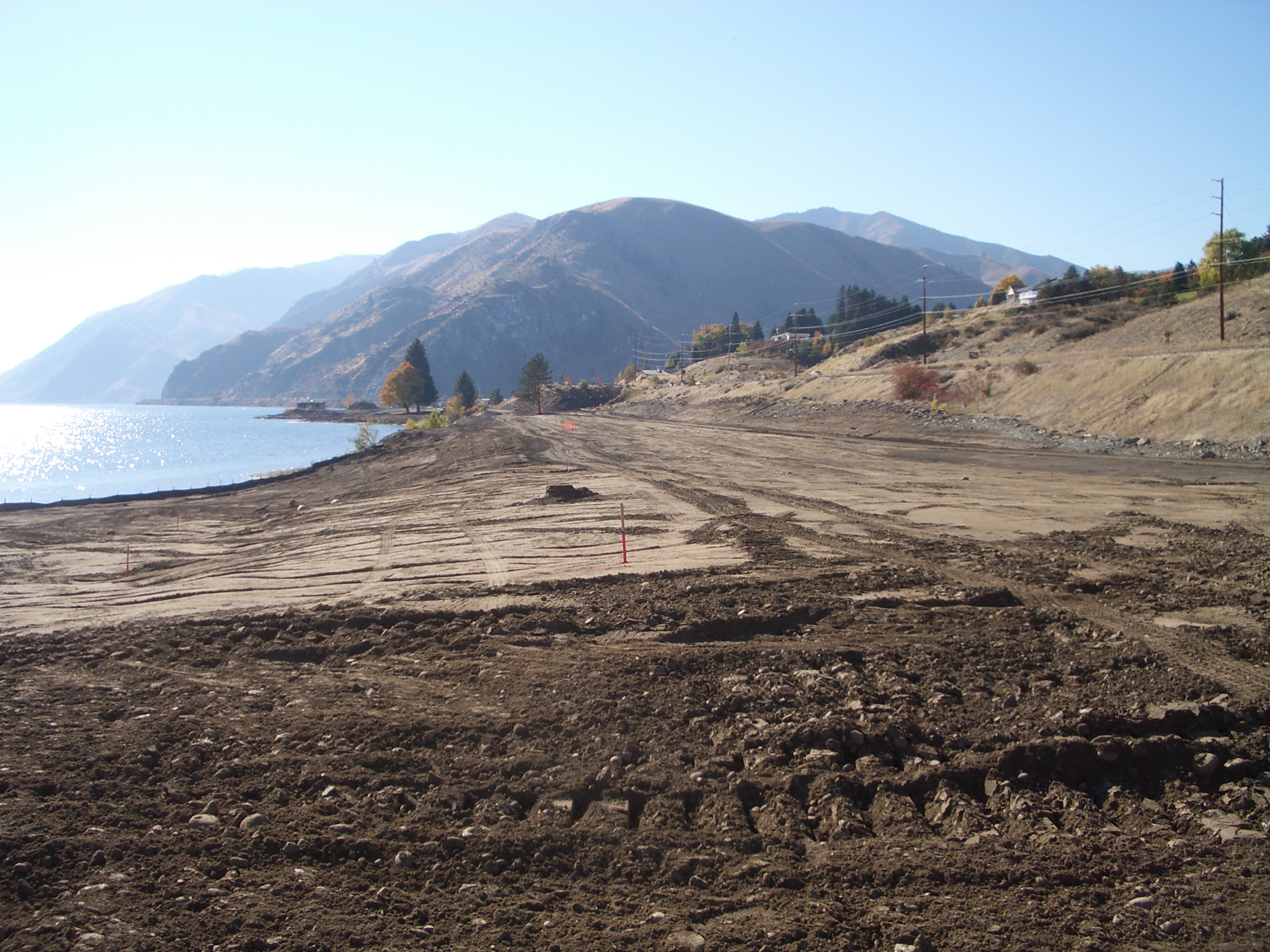
Construction is underway for the Entiat Park Revitalization project. Here’s how it looked last week.
Here’s a zoom-in look at the future!
Here’s the whole plan…
J.A. Brennan is currently providing construction support services for the 30-acre waterfront (5,600 linear feet) park remodel. Our multi-disciplinary team (AJEM, Pacific Engineering, Z Engineers, HV Engineers, Nelson Geotechnical) developed the design and construction contract documents for Chelan County Public Utility District. The $6 million revitalized park will offer visitors new campsites, a group camping area, RV sites with amenities, improved water access, a new boat launch, a hand-carry boat launch, comfort stations, swimming areas, multi-use trails, and day-use areas.
A Focus on Improving the Camping Experience The upgraded camping facilities include new walk-in sites laid out to consider privacy, views, and access. Fully-equipped RV sites will accommodate a larger variety of vehicle lengths and provide RV camping accessory configurations. The RV sites and access road will be rebuilt further away from the shoreline, leaving the shoreline environment for pedestrian and bicyclist enjoyment, and enabling native plant revegetation along the water. This dry, often hot eastern Washington site will consist of irrigated areas of lawn and shade trees for park use, as well as extensive areas of invasive species eradication, native shrub steppe-restoration, and riparian revegetation.
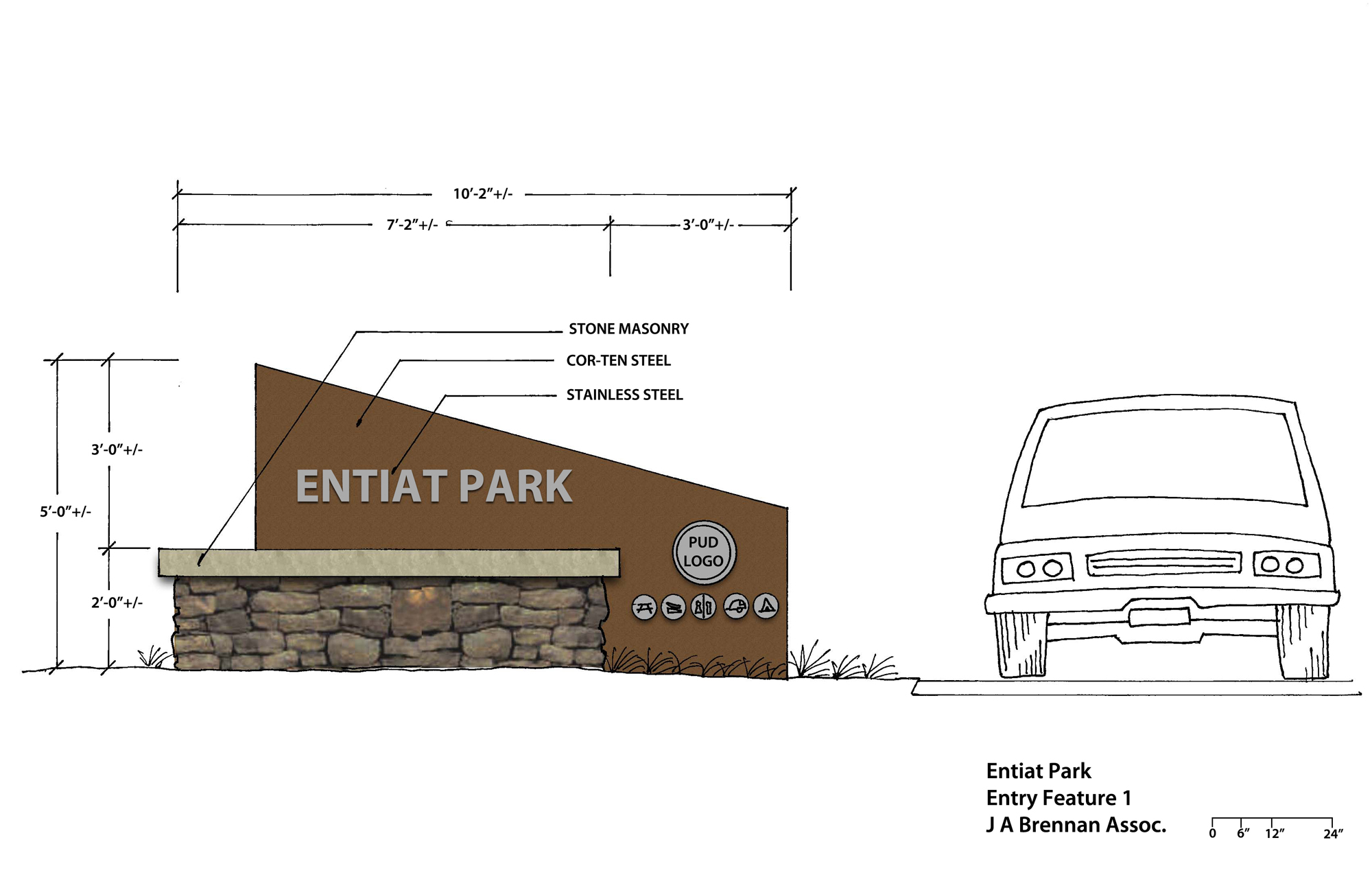
Creating a New Identity
Here are some images of the new signage and park architecture.
For more information and a few demolition pictures, please check out the PUD’s website.
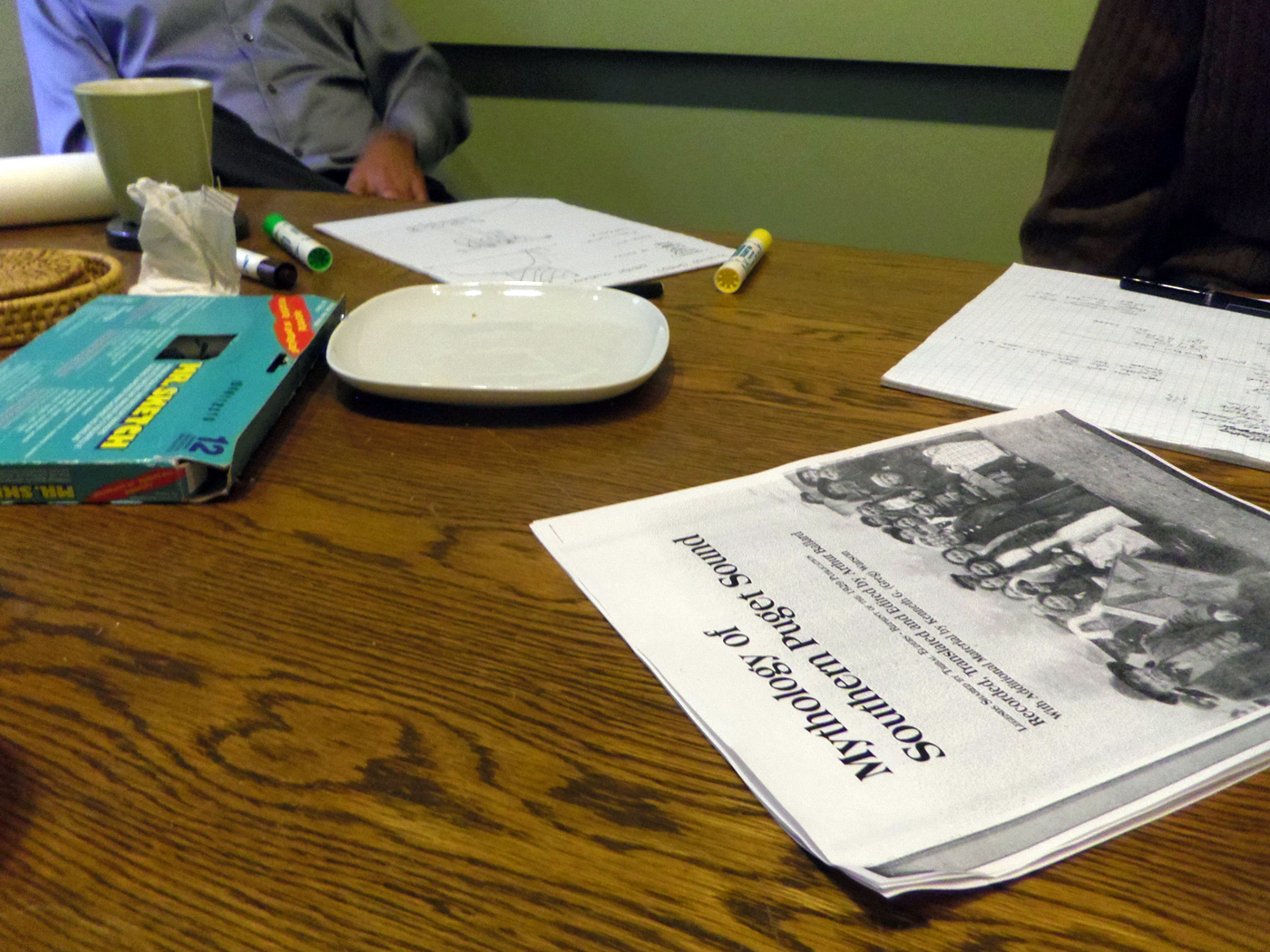
Every other Friday afternoon the JAB team spends dedicated time analyzing and discussing one topic of relevance to the practice. The issue of the day can involve solving a design problem, theorizing, critiquing, brainstorming, or sketching design ideas.
Recent discussion topics include
Designing new details for fences and gates
Developing a site opportunities and constraints map for a marketing effort
Developing a concept for a focal point
Choosing a park signage theme
Looking at case study parks in Chicago
Cloud Gate, otherwise known as the ‘Bean;’ in Chicago’s Millennium Park
The coLAB session is our chance to get all the brain power of the firm in one room for workshop. Eighty-eight years of combined experience drilling into one issue results in some amazing aesthetic design and creative problem solving!
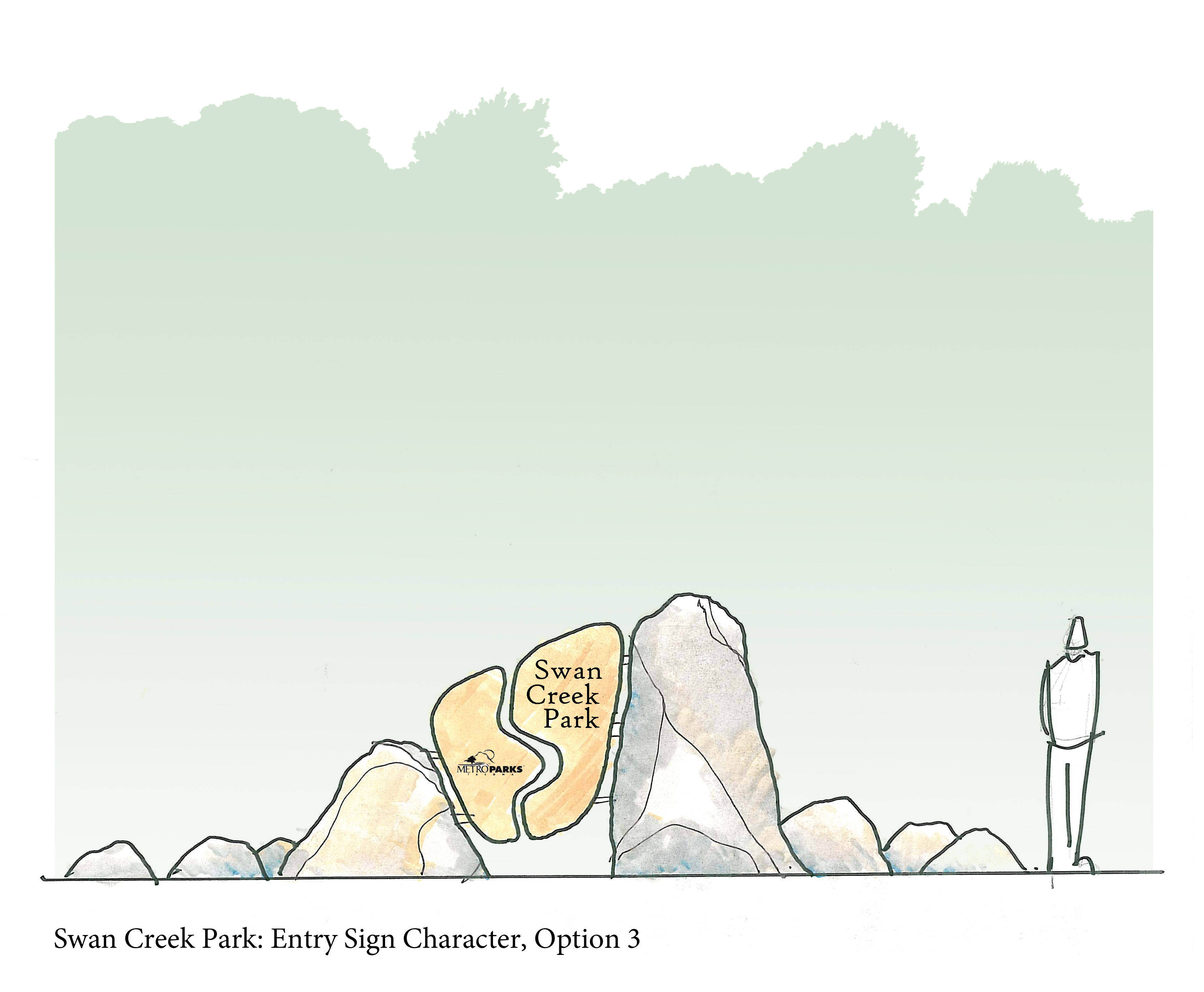
Entry signage concept for Tacoma’s Swan Creek Park
This time is a chance to hear everyone’s voice on a topic/project. Voices from outside a project’s regular team can provide interesting insight, maybe even shift and shape solutions in new directions.
We use CoLAB to keep us up-to-date with what is going on in the profession and in the office. It takes discipline and commitment to set aside this dedicated time. But the results have shown the time to be productive, inspiring, and fun!
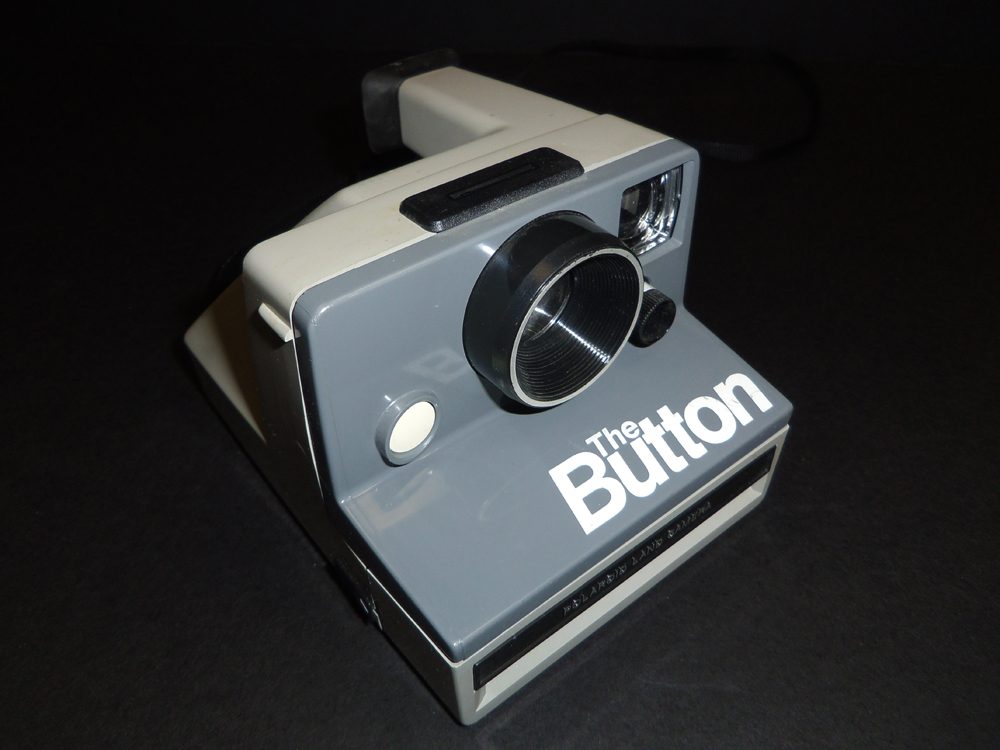
Keeping the image library organized and up-to-date is time consuming for a design firm. We found something image-related to smile about when we found this relic, with its original box, in the back of our old storage cabinet.
Then: $26.99 Fred Meyer price tag
Today: $6.99 on ebay
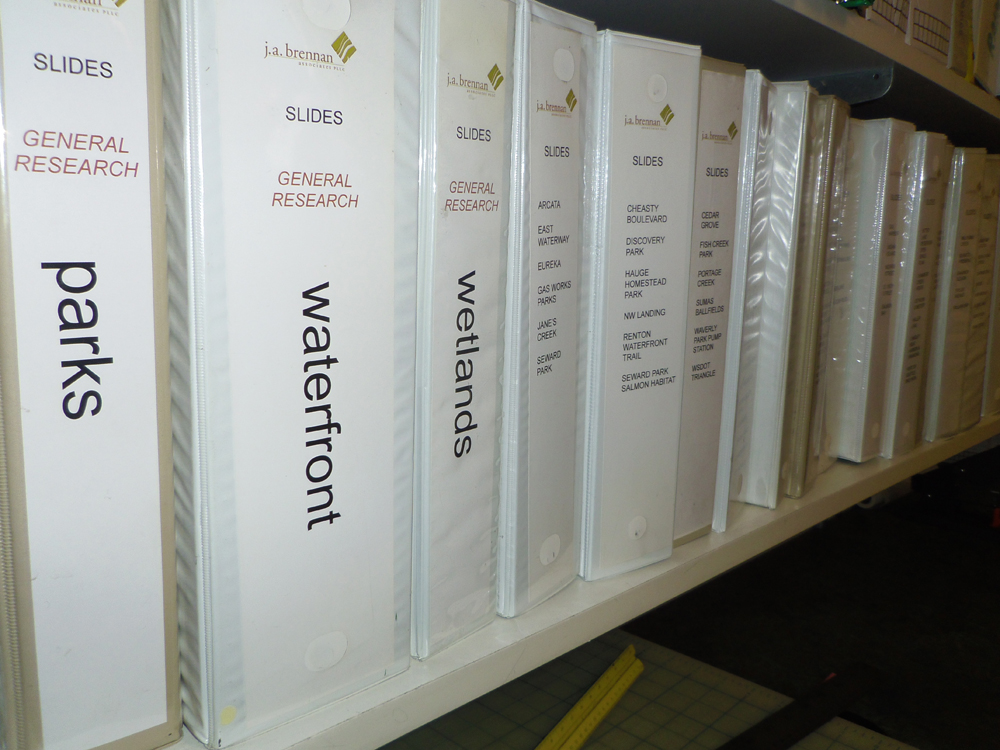
As the pre-digital version of instant-photo gratification, The Button performed for us when we desperately needed a real-time photo. From the early days through the 1990s, the majority of our project images were collected as slides and organized in binders. We still have the binders and are on the verge of converting some of that collection to digital format.
From the Slide Era:
The slide library awaits selection for digitizing. Too bad we can’t locate our slide projector. We’re looking forward to a day of bending over the light table!
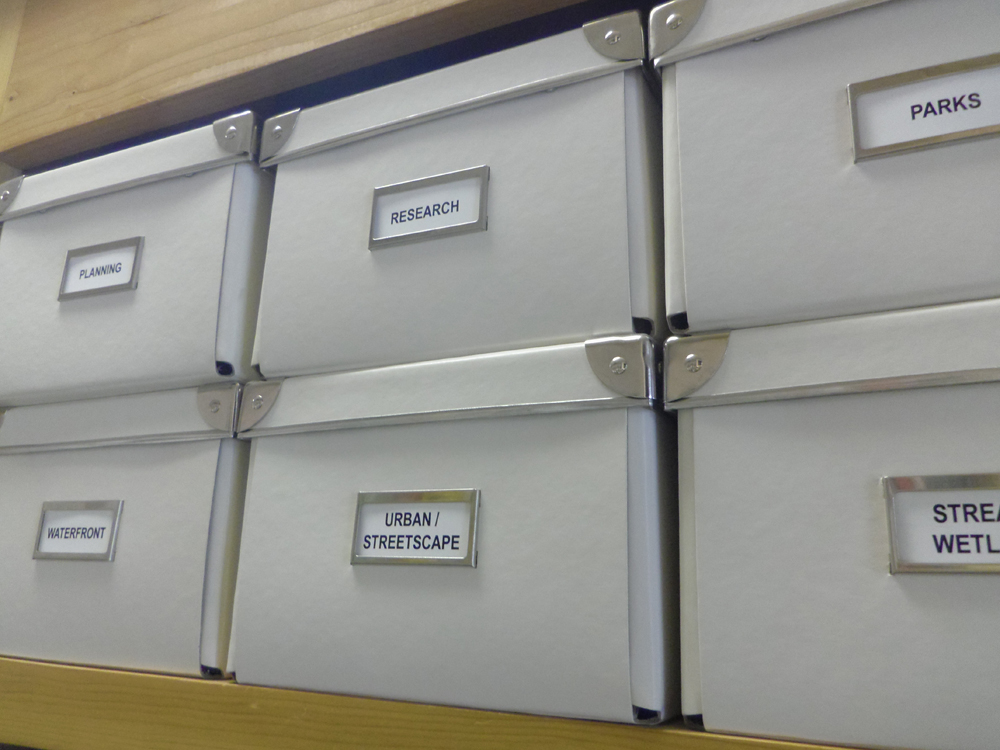
Negatives and Prints
What will we do with these?
Scan the prints? Scan the negatives?
Most likely: After we pick out our favorite images for scanning we will accept that we have not opened a box in seven years and let the rest go.
A Digital World
Today site photos come back from the field via phone camera, DSLR camera, and compact digital camera; we have a camera for every occasion. Keeping digital images organized is no easier! There are more photos than we had in those simpler days of The Button’s reign.
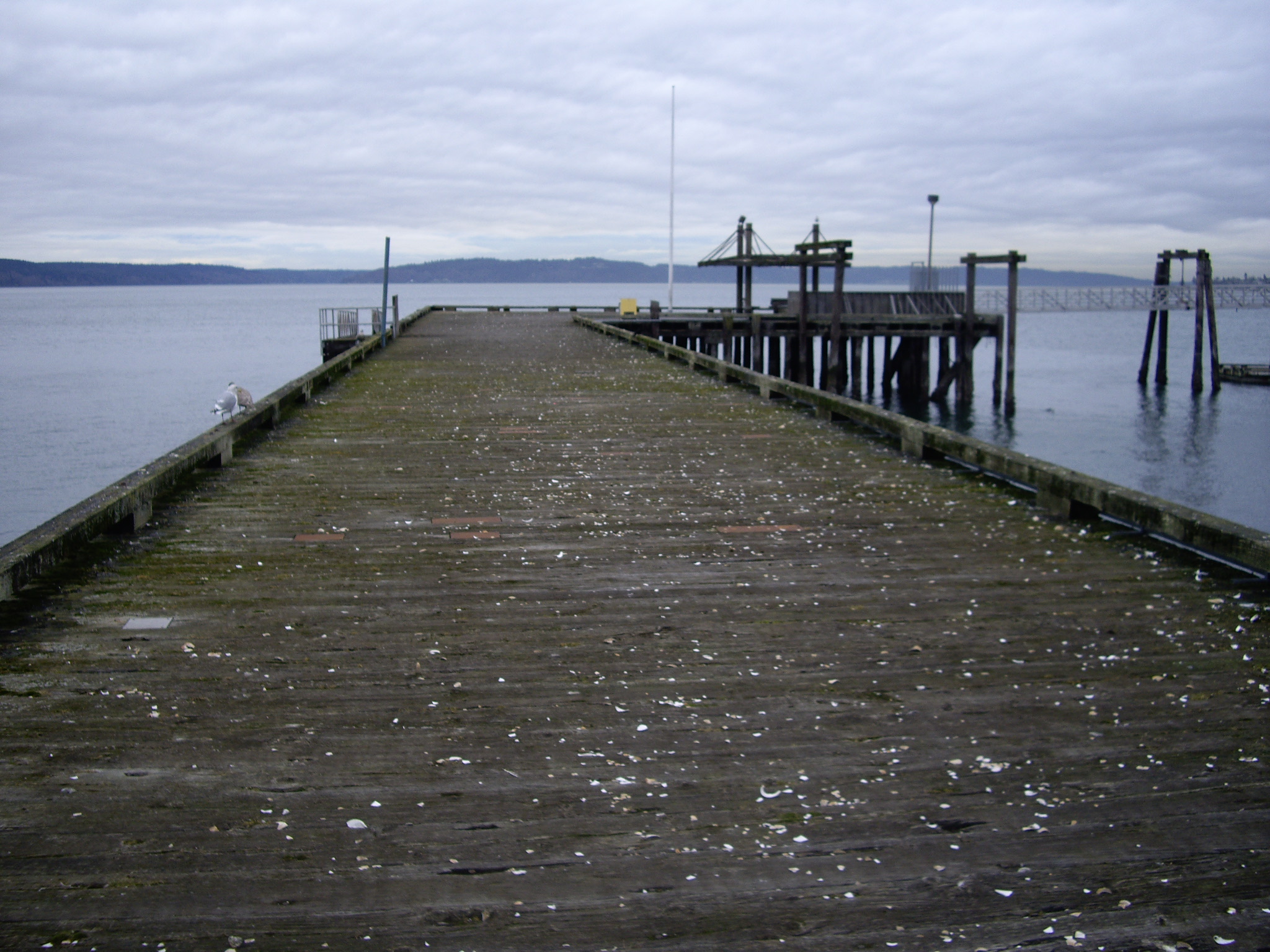
Old Town Dock after Re-creationBefore restoration, the dock was unsafe and closed to the public.
by Mike Perfetti
Public parks and outdoor civic spaces provide many day-to-day and long-term civic and environmental functions. Park creation and re-creation require coordination and collaboration between designers and stakeholders in order to create a design that reflects the desires, trends, and economics of a community at a specific point in time. As well, the design must respect the past while responding to perceived environmental factors. Communities inevitably change and as time grinds away we are tasked with recreating the place. If we do it right, the place will be renewed and become beloved in new ways.
Understanding and Appreciating the Past
Many parks are rich with histories treasured by their communities. These stories are vital to a community’s identity.
Like buildings, outdoor public spaces can be historic, and are often guarded by the people who love them. For landscape architects, it’s important to engage with the community and project stakeholders and to demonstrate an understanding and appreciation of the past. We must also demonstrate the ability to implement changes that preserve, and ideally, enrich that history.
What are some of today’s cultural trends and environmental factors that affect parks? There are many. Some examples include
The popularity of dog-ownership
Urban Densification
Cultural diversity
Sea level rise
Old Town Dock
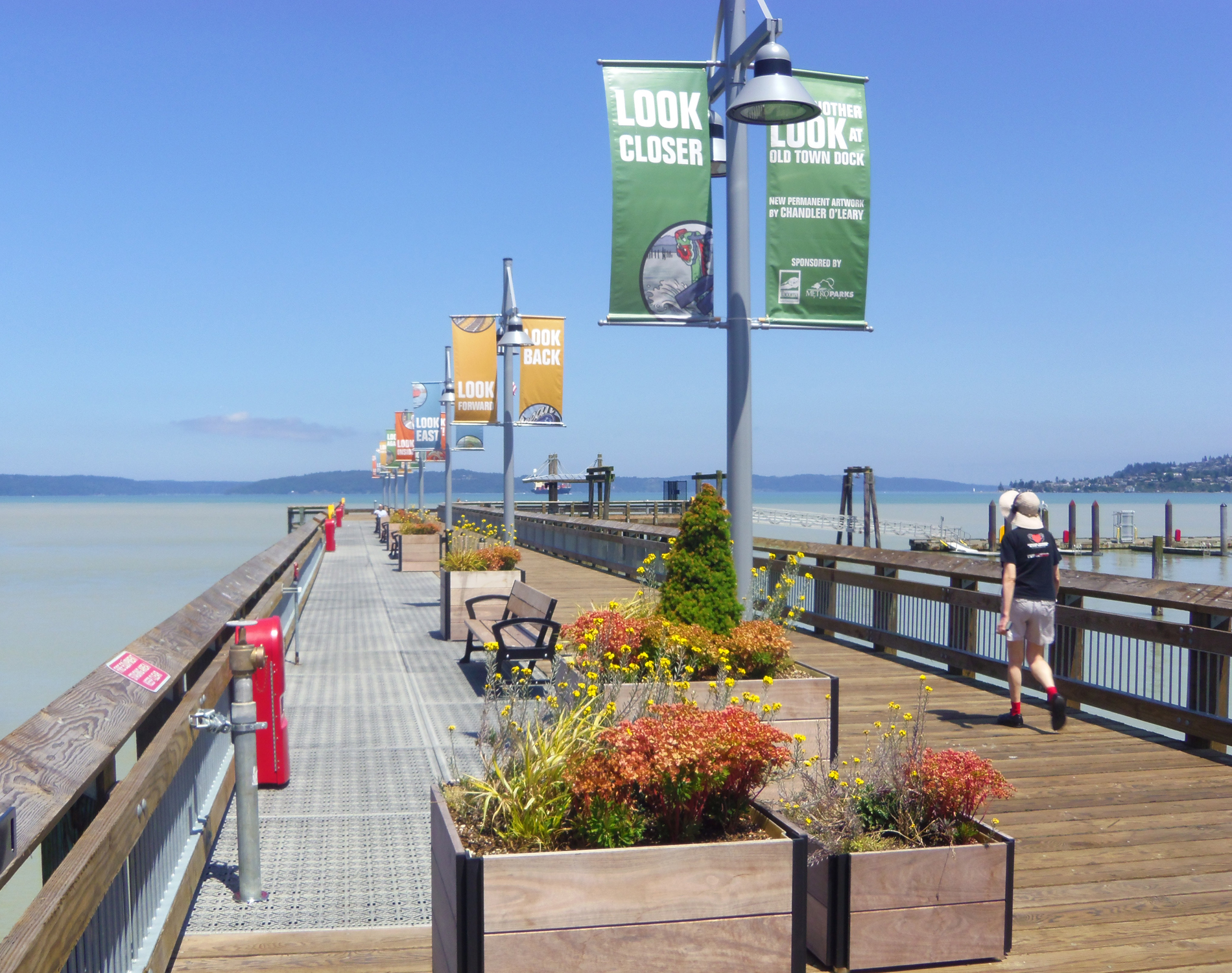
Old Town Dock reopened to the public in May.
J.A. Brennan Associates has worked on several projects recently that featured the redesign of historically significant civic spaces. One project is Tacoma’s Old Town Dock. Located on the shores of Commencement Bay, the dock is an important place where people of the historic Old Town neighborhood connect with the water. Old Town was once a fishing village, which eventually grew into part of Tacoma’s industrial waterfront. Old Town Dock was built in 1873 and served the shipping industry until operations moved. The dock fell into disrepair, was condemned, then rebuilt in 1953 and opened to public use with the additions of railings, benches, lighting, a restroom, shelter, and artificial reef. As Tacoma’s Ruston Way waterfront was changing from industrial use to recreational use, the dock became a popular public space, but was closed in 2008 after it was determined to be unsafe.
Working with Owners and Stakeholders
The City hired Reid Middleton, with J.A. Brennan, to design the dock renovation and restore the vital public space. The design team worked closely with the Old Town Dock Citizen Advisory Group to understand the history of the dock and the Old Town Neighborhood. We incorporated many of the advisory group’s recommendations within the context of the Ruston Way waterfront, while accommodating the City’s project budget.
The advisory group sought to recall the character of the older dock and relate to its setting in the Old Town neighborhood. The group wanted to provide day-use moorage and launching for human-powered watercraft, opportunities for water access and enjoyment, and strengthen the connection between the dock and Old Town.
Re-creation
The re-created dock maintains its original footprint. For the design of the dock, floats, and upland area, we tried to achieve the advisory group’s goals through the selection of appropriate materials, namely wood on the dock, and brick onshore. Both materials relate the character of the dock and neighborhood. Double mast-arm lights, designed by Harbor Power Engineering in collaboration with J.A. Brennan, recall the old wharf’s design standards.
The old wood decking was generally in disrepair but some wood was in good condition, allowing for adaptive reuse. This salvaged wood was laid in a distinctive pattern beneath the viewing pavilion. Originally a wood-shingled roof structure, the pavilion was restored with a standing-seam metal roof and rebuilt to recall the original pavilion.
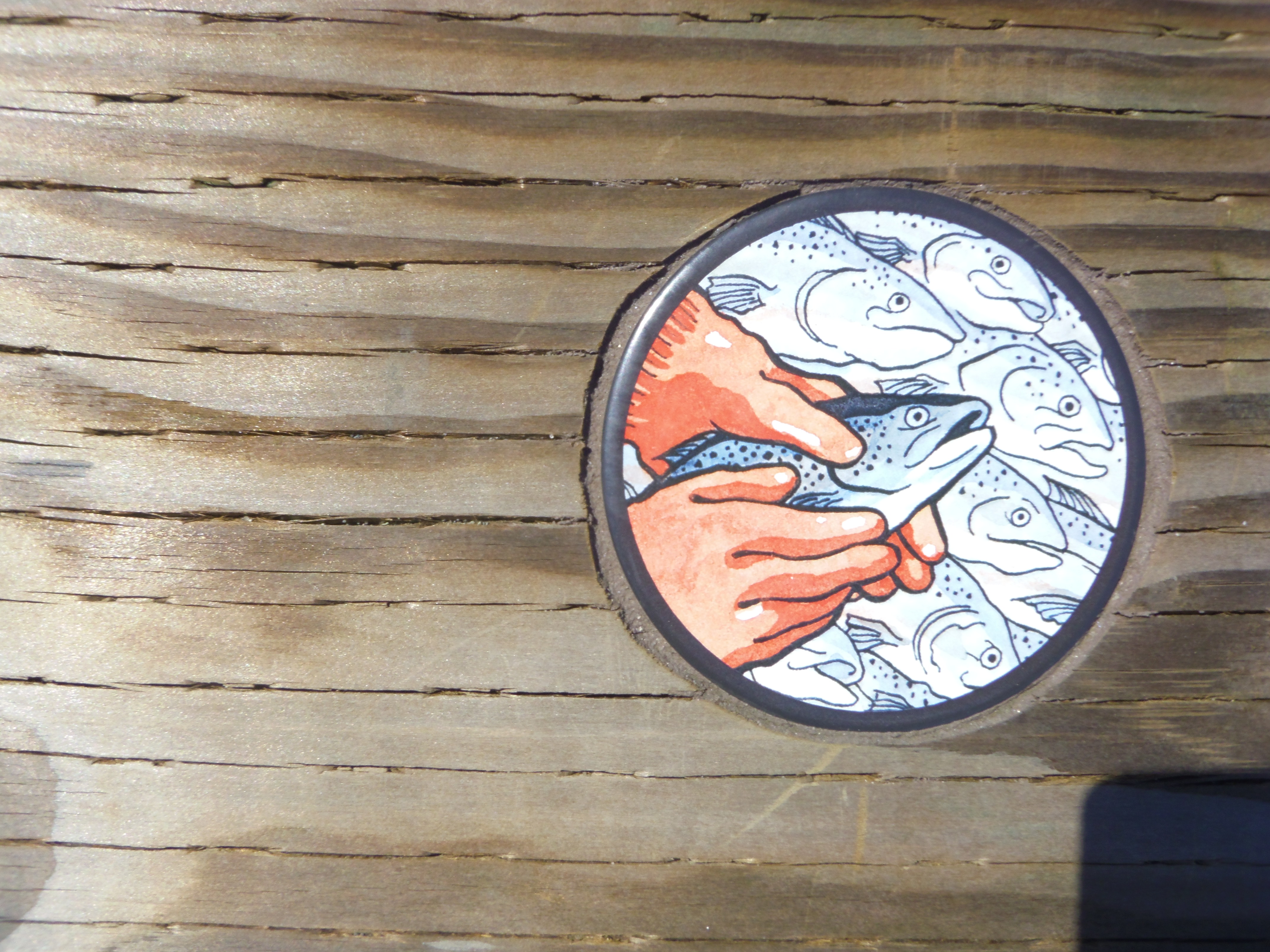
“Droplets” — a series of 9″ to 12” circular porcelain enamel art installations, by Chandler O’ Leary — are dispersed throughout the site and depict past and present scenes of Tacoma’s waterfront. The installation adds intrigue and contributes to the sense of place, providing dock visitors with a subtle and beautiful journey through time.
The dock was renovated and reopened May 15, 2013. The design process was a successful collaboration between designer and stakeholders, and the outcome reflects the needs of the community while enhancing the historic character of the place. Since its opening, Old Town Dock has been a smashing hit in Tacoma’s Old Town neighborhood, defining public space, expressing its history, and drawing people to the water.
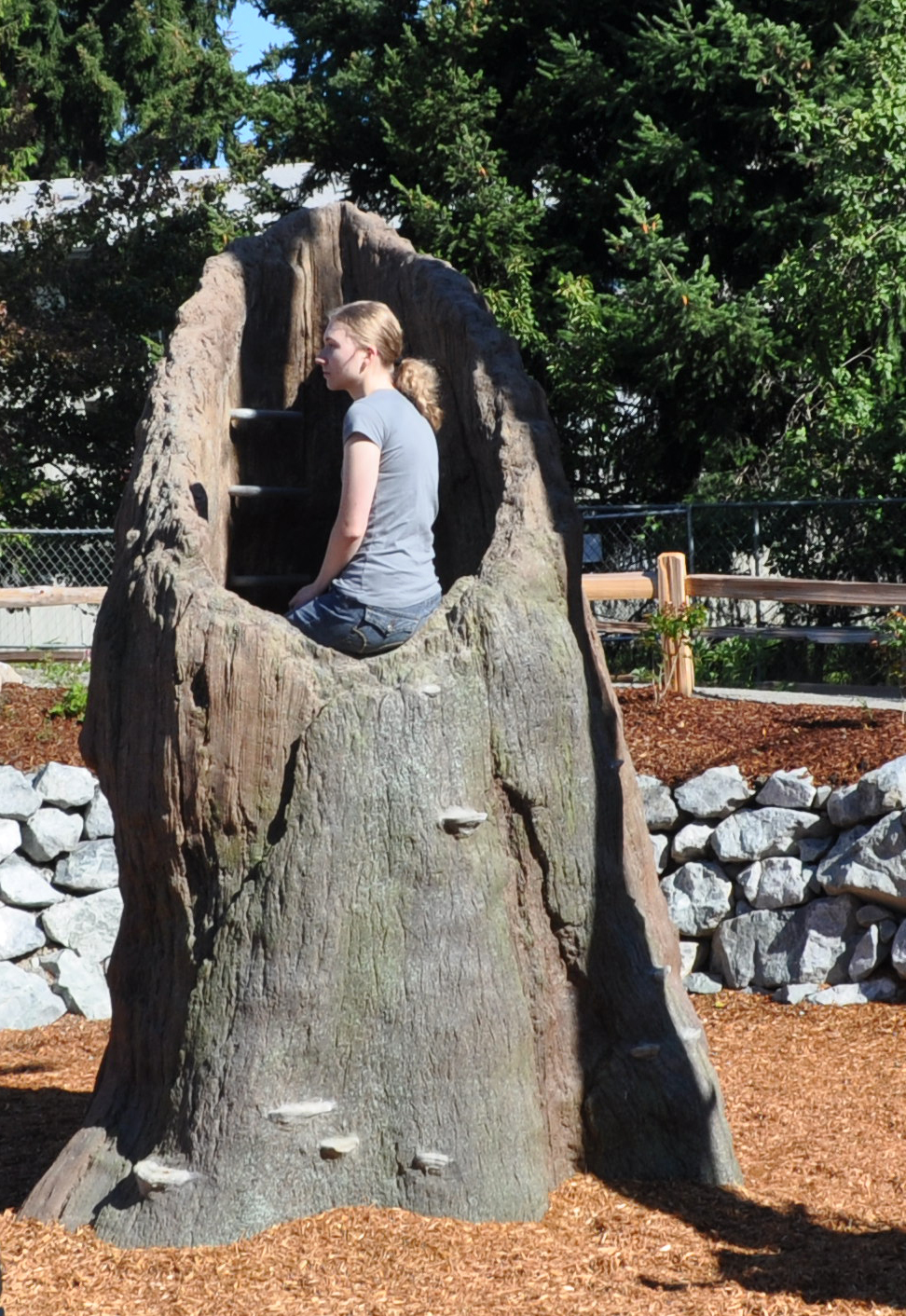
Custom designed climbing/play snag at Discovery Pond, Tacoma Nature Center, Tacoma, WA
Recently Mike Perfetti, senior associate, presented at the Washington Recreation & Park Association’s (WRPA) Annual Conference & Trade Show, held this year in Vancouver, WA. WRPA’s mission is to promote excellence of current and future Parks and Recreation professionals through advocacy, education, networking, and training.
Mike’s presentation, Nature-based Playgrounds: From Design to Operation, provided insight for park managers, staff, and students interested in implementing nature play opportunities in public parks.
Background Today there is substantial amount of awareness and supporting research regarding the unhealthy state of many American children. Since the release of Richard Louv’s best-selling book, Last Child in the Woods: Saving Our Children from Nature-Deficit Disorder (Algonquin Books of Chapel Hill, 2005), it has become a priority among parents and park managers to help children play safely outdoors and, at the same time, benefit from the teachings of the natural world.
In his book, Louv cites the well-known obesity epidemic among American children today and the lack of exposure to the natural world, which he posits inhibits nature appreciation, understanding, and survival skills, as well as physical conditioning. He believes this lack of exposure to the outdoors has to do with parents’ and guardians’ real and perceived fears, as well as a high level of exposure to time-consuming pursuits of gaming and video watching.
Mike’s presentation advocates for the implementation of nature-based play opportunities within public spaces. Mike describes two nature play models:
Model 1: The Informal Free Play Model
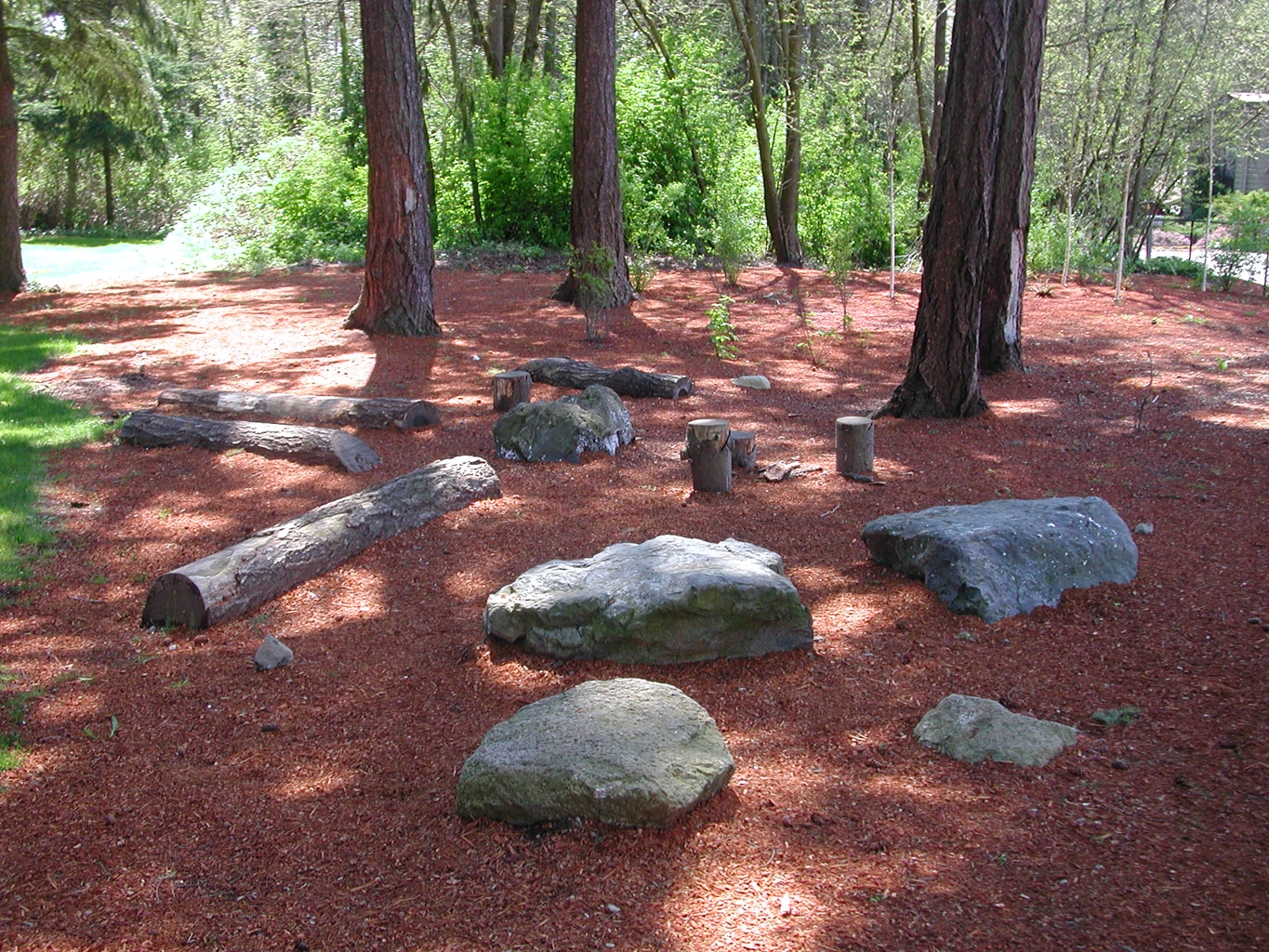
Mathison Park nature play features in Burien, WA
In this model, nature play takes place on a piece of public land set aside for that purpose, or within which it is an allowed use, but the amount of introduced play components is kept to a minimum. This model represents nature play at its core, allowing children to play in an essentially undeveloped, naturalistic environment, and is also beneficial in terms of being inexpensive to implement.
Model 2: The Fabricated Nature Play Model
Tree house structure at Discovery Pond, Tacoma Nature Center
The fabricated nature play model relies on introducing fabricated play components into an area, which provide some degree of nature-oriented play and/or learning. This is useful in a number of applications, such as sites that lack significant natural components, or where maintenance, liability or supervision may be issues. This can be a particularly effective model in terms of appealing to a great number of people, and can be adapted to a wide variety of sites and conditions.
Case Study
Discovery Pond at the Tacoma Nature Center
Mike presented J.A. Brennan’s design for the Discovery Pond Nature-based Playground at the Tacoma Nature Center as the major case study in understanding how to implement nature-based play in a park. He highlighted the need for outlining a program with goals and objectives and listening to stakeholder input as key components to creating a successful nature play area.
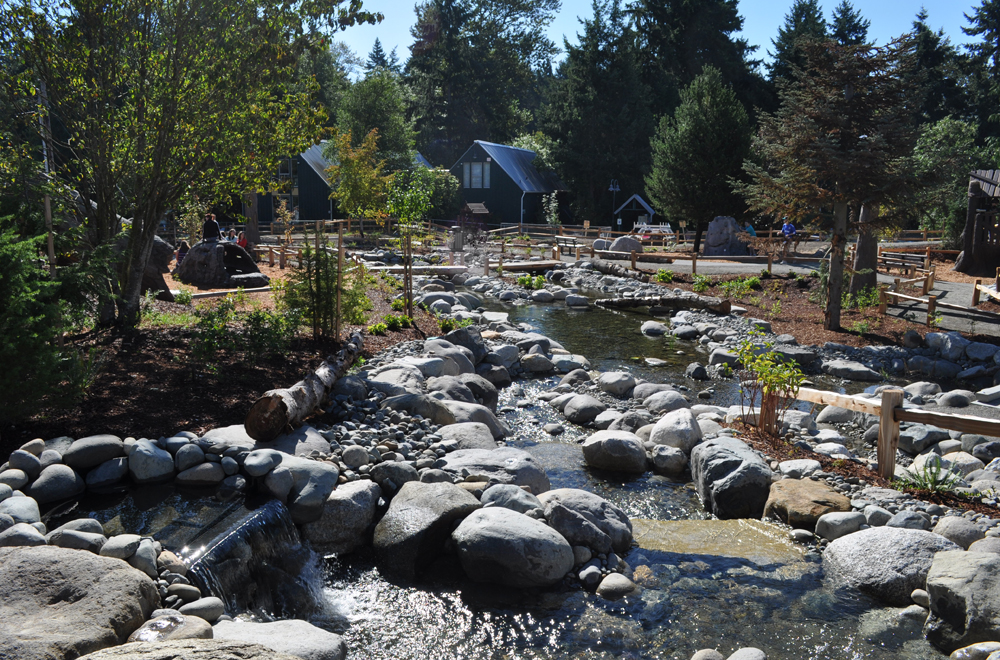
Discovery Pond is centered around a recirculating water feature and features an array of fabricated natural-looking play elements that serve children of all ages and is ADA accessible. The design carefully restores the site and creates a natural appearance that complements the Nature Center’s site and programming.
Starting at about minute 3:55, view the City of Kent’s TV feature about the Riverview Park Ecosystem Restoration Project. City of Kent, WRIA 9, U.S. Army Corps of Engineers, and others talk about the project.
Engineering: Tetra Tech Inc.
Landscape Architecture: J.A. Brennan
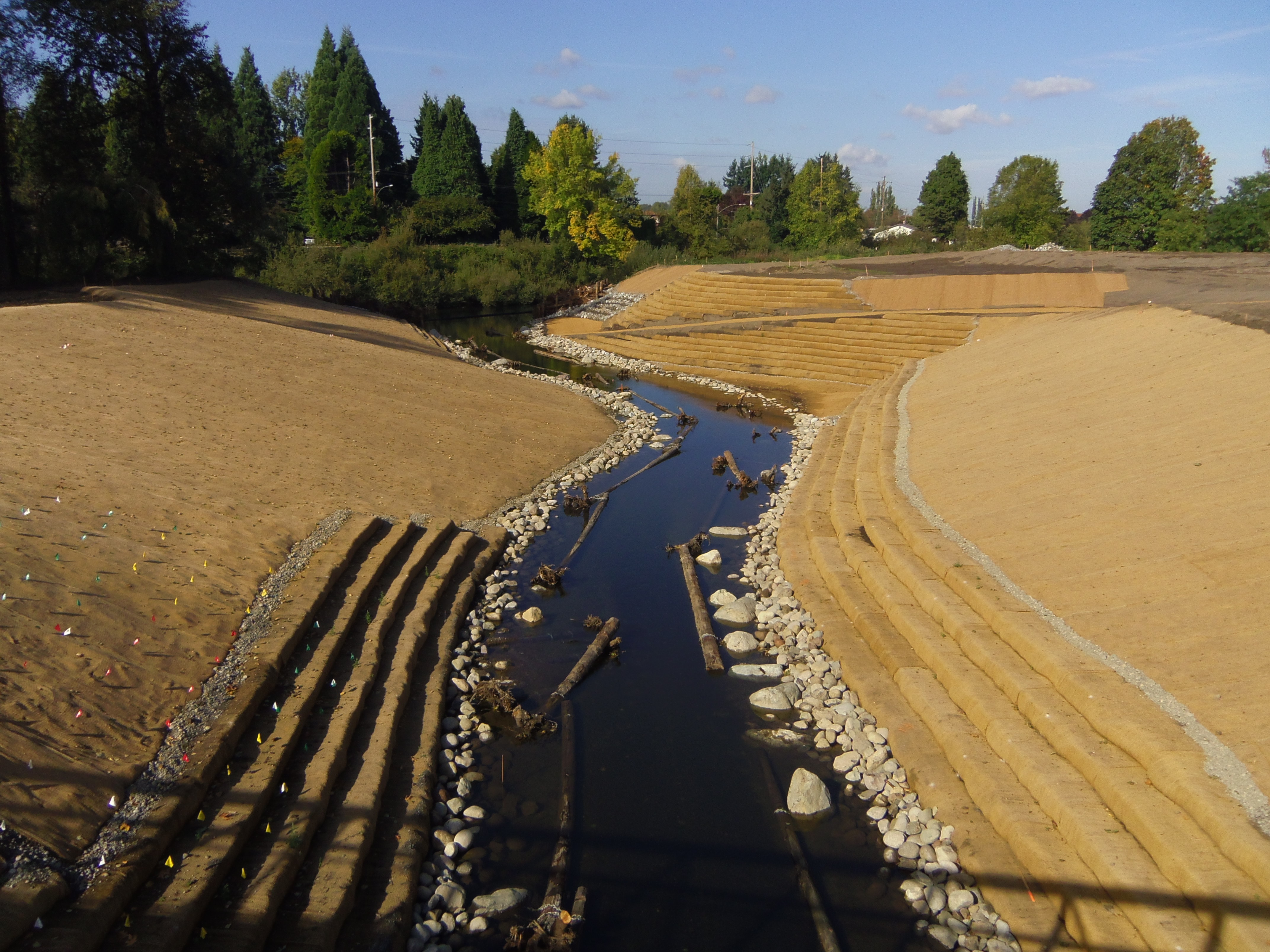
The Riverview Park Ecosystem Restoration Project reached a milestone in October when the channel inlet and outlet coffer dams were removed, allowing water to flow for the first time though the new side channel! Crews raced against the clock to finish in-water work before migrating salmon entered this reach of the Green River. They excavated to finish grade, placed streambed gravel , rock slope protection, bioengineered soil lifts, and anchored in-stream woody debris. Careful monitoring ensured that salmon were not impacted by construction activities.
Since then, crews have hydroseeded the site, and now are planting more than 7,000 native trees, shrubs and ferns and more than 2,000 native emergent plants. We look forward to seeing the plants all installed; then, site will really begin to look like a natural channel….irresistible to the fish. So, stay tuned for more updates!
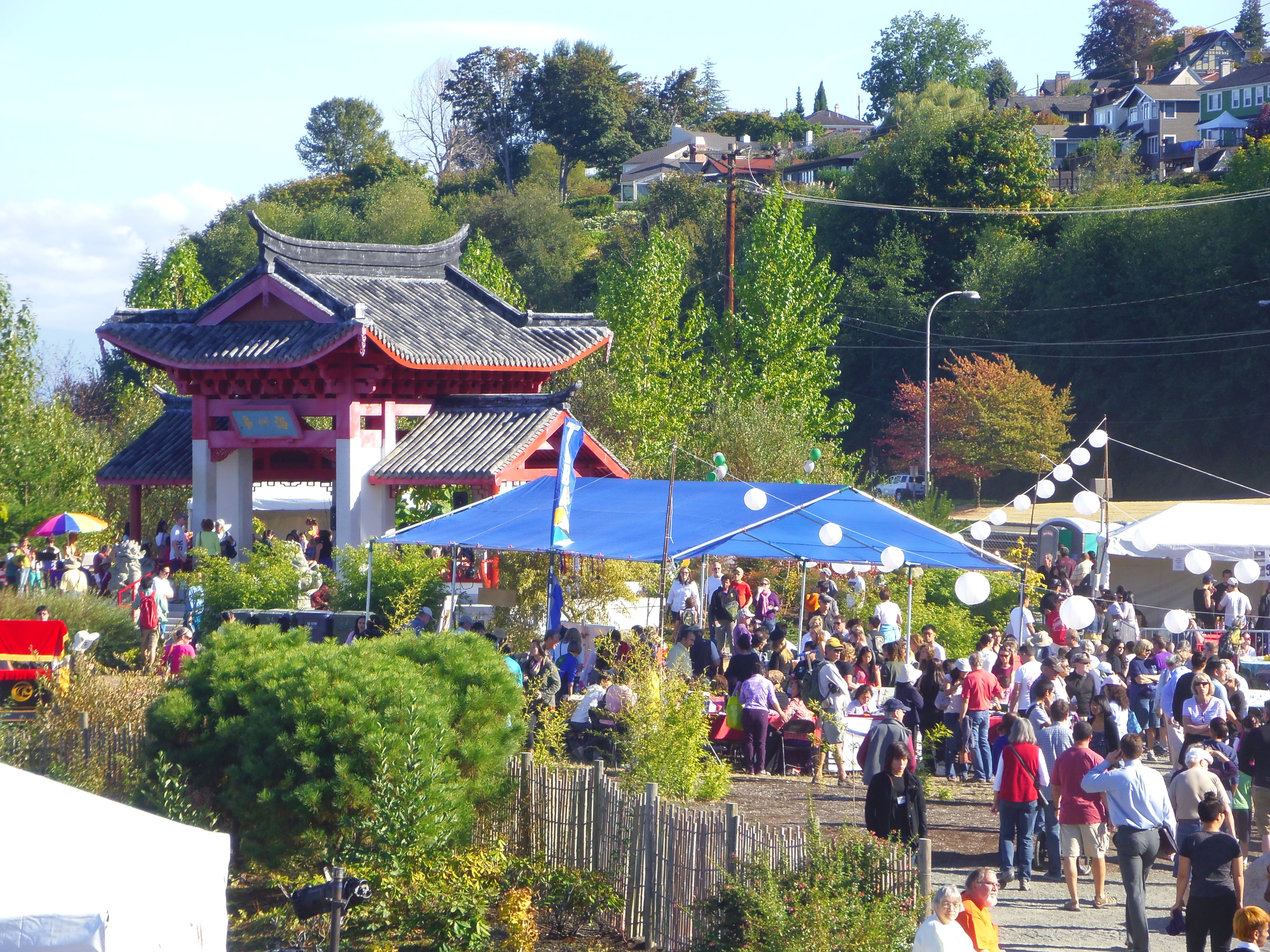
The Moon Festival or Chinese Lantern Festival is a popular lunar harvest festival celebrated by Chinese people. The festival is held on the 15th day of the eighth month in the Chinese calendar, close to the autumnal equinox.
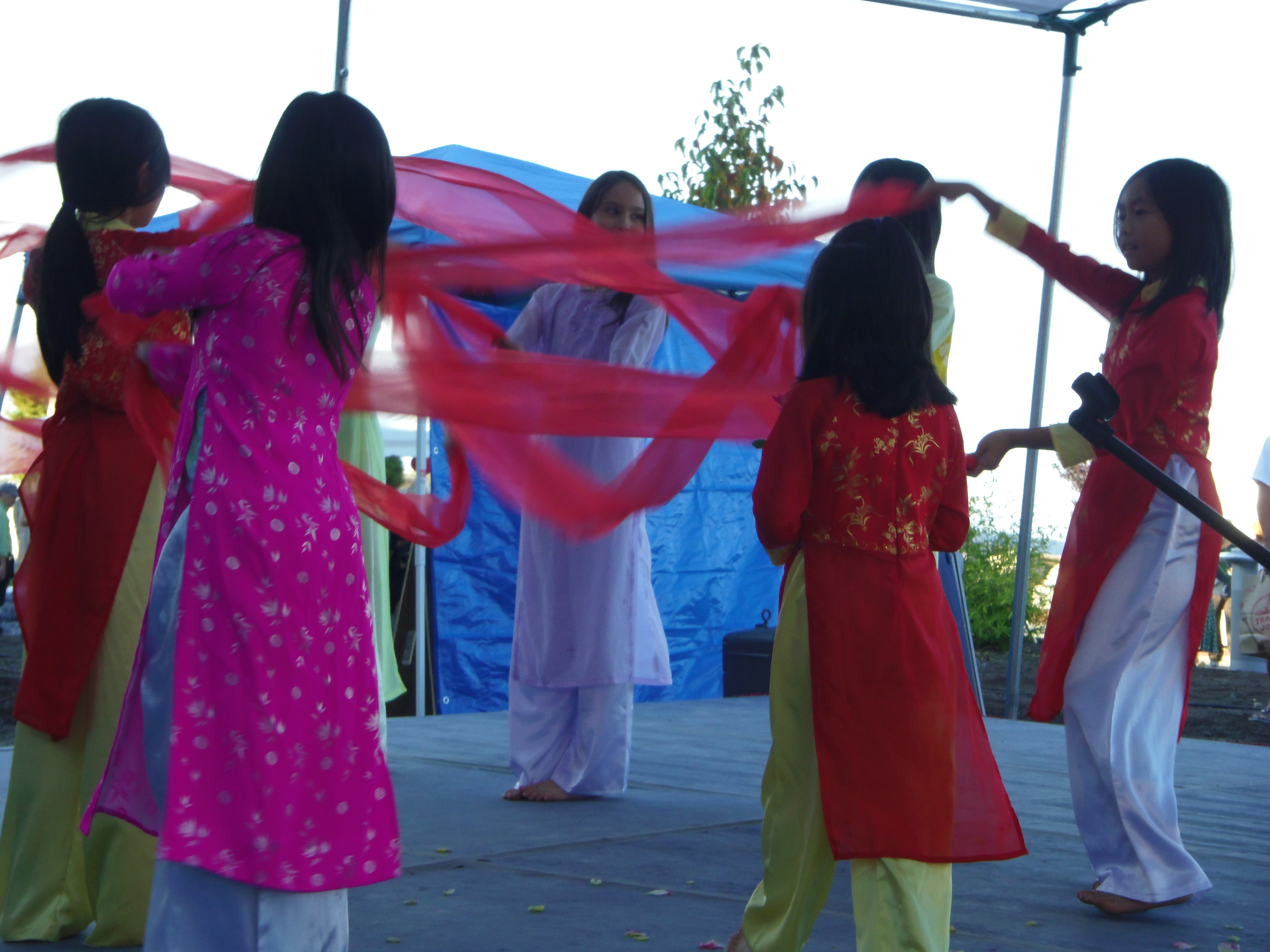
This year the Tacoma Chinese Reconciliation Foundation and the City of Tacoma hosted the first-ever Moon Festival at the Tacoma Chinese Reconciliation Park on September 29. It was estimated that roughly 5,000 people turned out for the day-long event, which included dance and musical performances representing multi-ethnic traditions, food, calligraphy, tea ceremonies, and of course, the lantern parade after dusk.
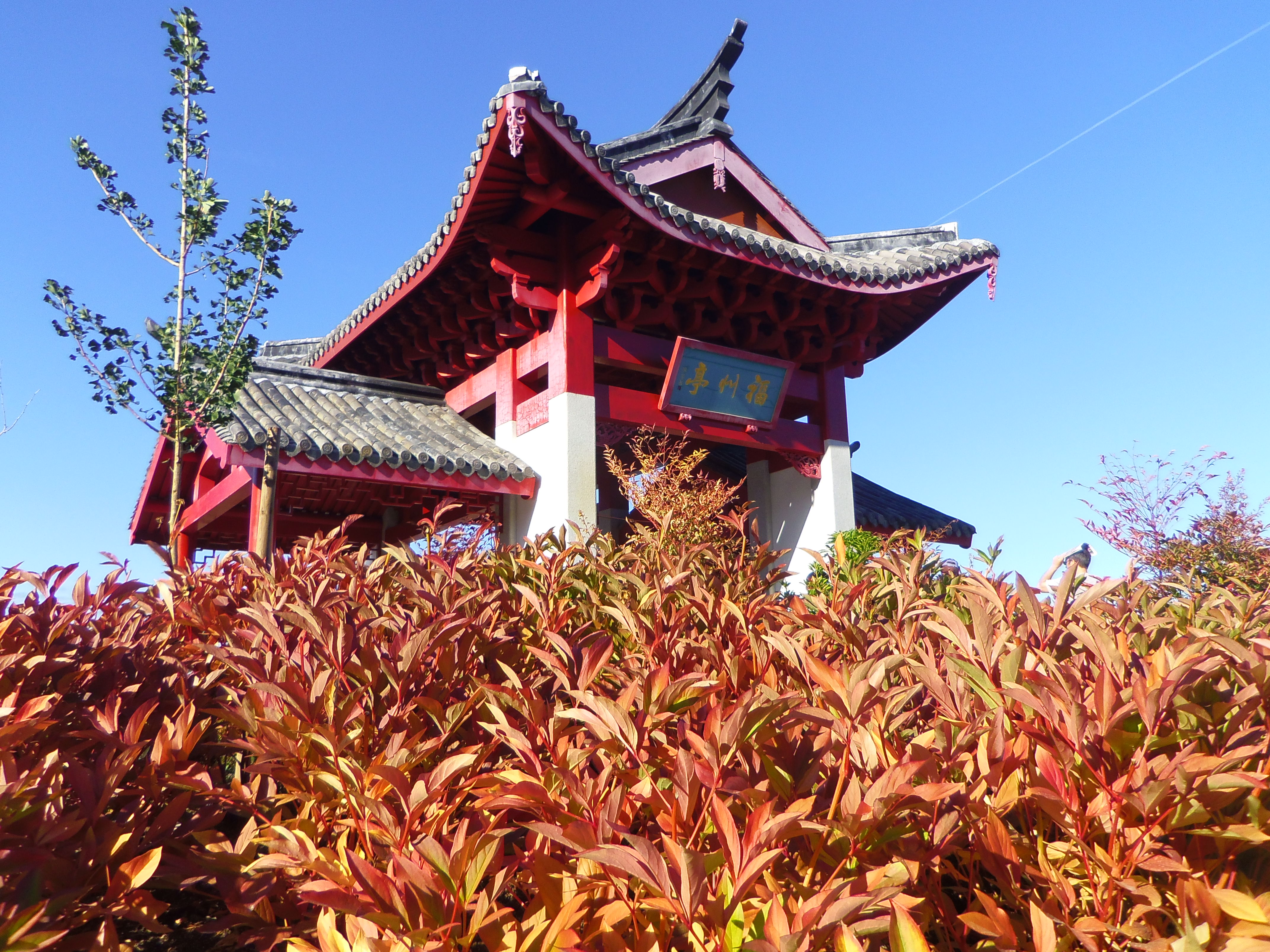
J.A. Brennan has been involved with the park design since completion of the Master Plan in 2000. Since then, two phases of construction have been completed, but they are only the beginning. A 200-person gathering hall, reflection pond, open-air pavilion (ting), art display space and classrooms are in the cards, in addition to a beautiful array of plants and outdoor rooms that are quintessential in a Chinese garden.
The turnout at the festival was astonishing. Seeing the traditions represented in the talent-filled performances was truly inspiring. The Tacoma Chinese Reconciliation Park provides a special place for reconciliation as well as celebration. With each phase, the story unfolds and celebration continues.
These were the choices the City of Kent had when considering improvements to the Boeing Levee at Three Friends Fishing Hole Park. As the city neared completion of flood wall design for the Boeing Levee, inventive thinkers proposed adding art to the wall’s face along the span of the park.
Six weeks of design time
We were brought into the project as the structural engineering design of the flood-wall levees was nearing completion; a short time remained until the project would be going out to bid. The short time-frame required quick thinking and an organized process. Our design team’s familiarity with designing aesthetic treatments for walls and bridges allowed us to go from zero to fully developed construction drawings for wall textures and surface treatments in the allotted time.
An initial brainstorming session with the client led our designers to develop two alternative themes. A nature-based Green River Ecology theme could honor the ecological story of the river. The second potential theme employed the history and geomorphology of the Green River Valley, from pristine river to agricultural and then modern-day industrial corridor. In either case, a part of the river’s story would be told for passers-by on the adjacent bike trail, park visitors, and adjacent industrial landowners.
Working out the details
Multiple material and treatment possibilities were discussed for the expression of the considered themes on the wall face. Options included
Standard and custom formliners, which would create bas relief sculptural elements integral to the wall face
Sandblasted aggregate reveal
Sawcut patterns
Glass fiber reinforced concrete
Green wall
In the end, cost was a major consideration. Research made it clear that the best way forward would be with custom formliners.
Ecological Story
With cost information and design alternative sketches in hand, our client opted to tell the ecological story. Our designers got to work developing a story board with appropriate images. Meetings with the client further refined the initial choices and allowed us to move forward with detail design of the custom formliners required to make this vision a reality. We generated CAD drawings that went into the bid package on time and on budget.
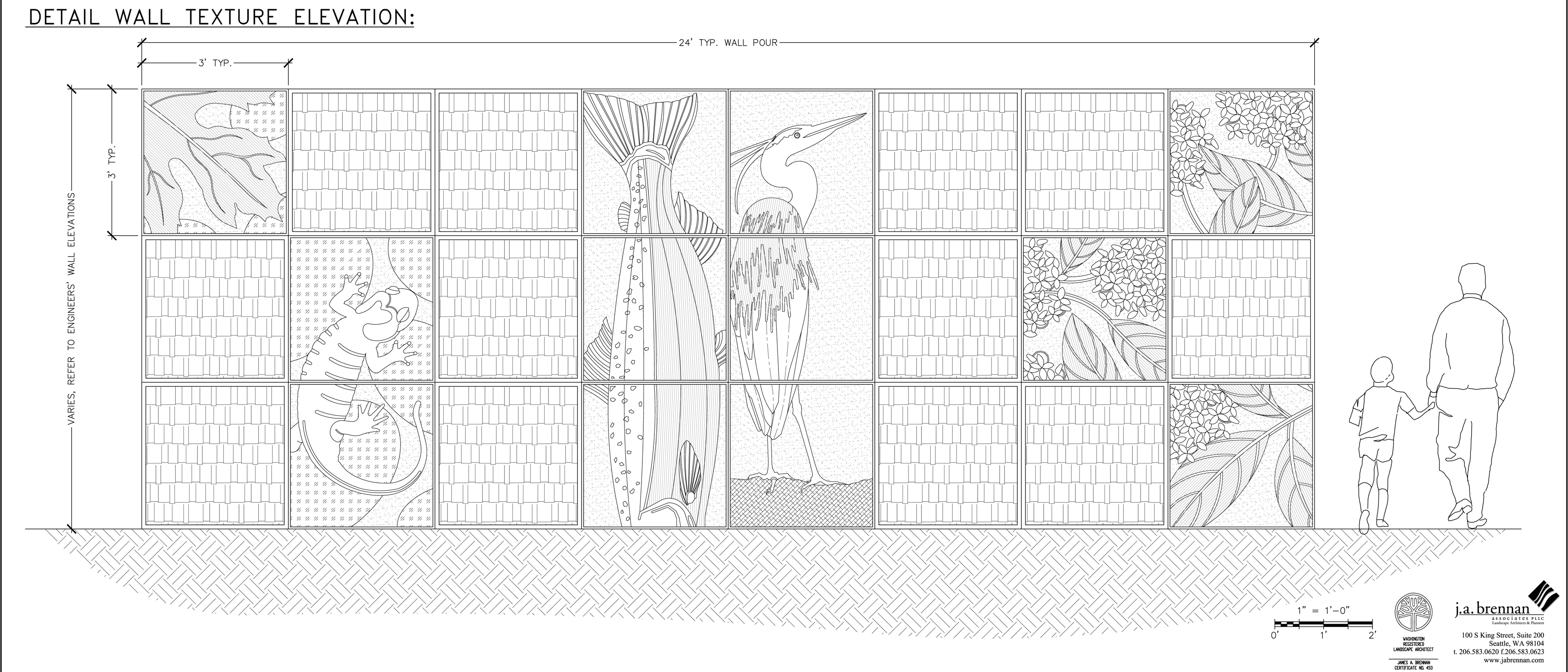
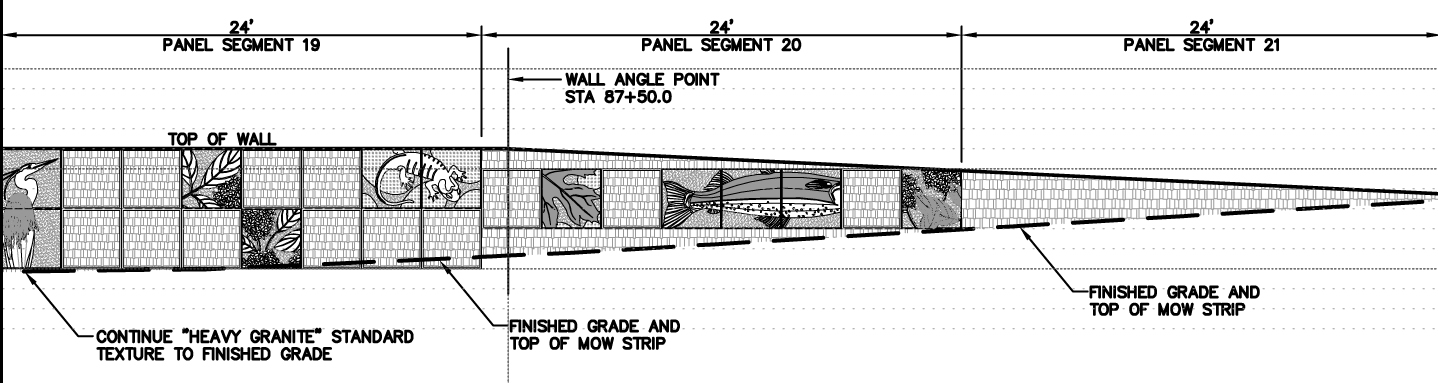
The final design celebrates the Green River with shapes, textures, and colors that are stylized representations of the life forms within the river system. Recognizable images were selected: salmon, salamander, maple leaf, redtwig dogwood, and blue heron.
Custom formliner panels are 3’x3’, which are easily multiplied to cover the typical wall heights (front and back). The panels depict the wildlife/vegetation in detail surrounded with a subtle background texture. Panels are designed so that they can be repeated in differing sequences and orientations, interspersed with standard formliner panels, thereby providing a rich and varying experience as one moves along the length of the wall.
In the end, our understanding of the aesthetic design process helped guide the client through a quick decision making process and resulted in a design that tells a place-sensitive story, turns a wall into art and enhances the park experience for all visitors.
The $2.65 million levee project is scheduled to begin construction mid August.
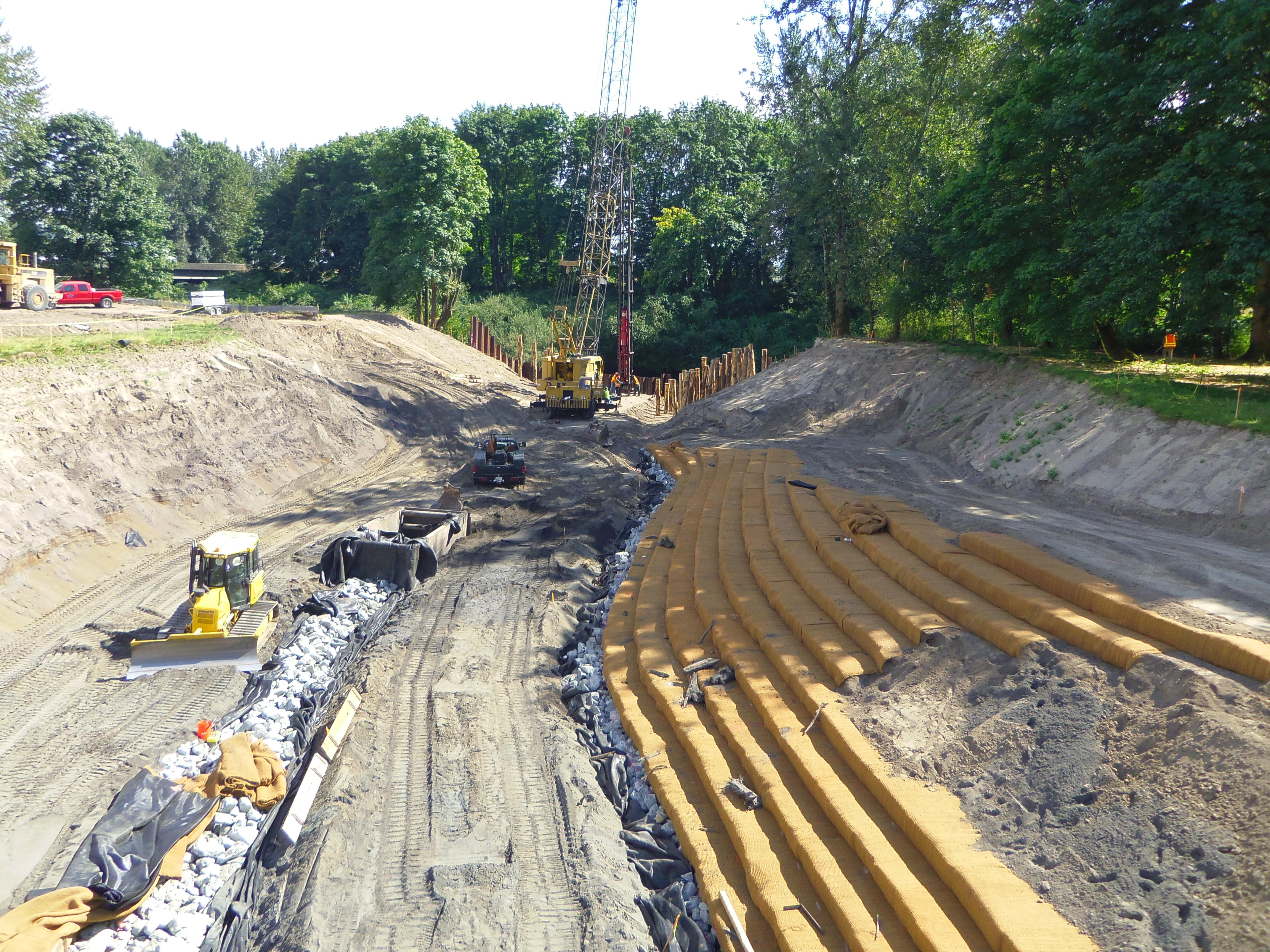
J.A. Brennan is part of a consultant team working with the City of Kent and the U.S. Army Corps of Engineers to create a habitat enhancement channel on the Green River at Riverview Park. In this photo, the 25’-deep side channel excavation is nearly complete.
The contractor, Performance Systems, Inc., is busily working to complete the excavation and shore protection. Excavators, rollers and dump trucks criss-cross the site moving and grading soil and fill materials.
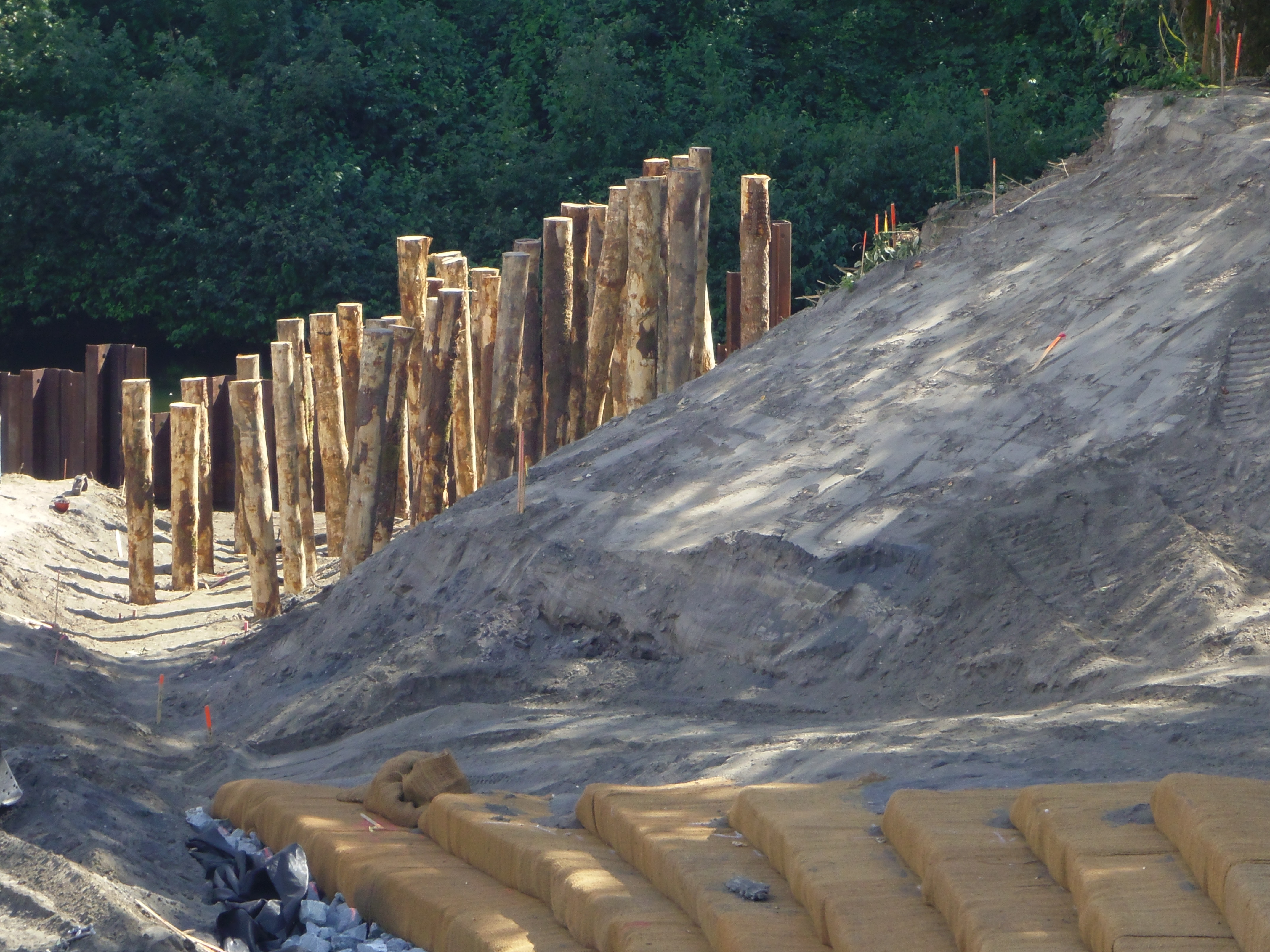
Looking up-channel, a crane installs coffer dam piles. In the foreground, soil lifts – soil wrapped in geotextile fabric – are installed. The lifts will be planted with both container plants and live stakes. Tetra Tech, Inc., the prime consultant and project engineer, is providing a variety of bio-engineering solutions to create a naturalistic and protected channel bank.
The foundation of the channel inlet constructed log jam structure is in place. This sturdy bio-engineering solution by Tetra Tech, Inc. is the first line of defense against potentially high-velocity, high-volume storm flows surging down the Green River. Live stake plants will provide further erosion control, and help naturalize the constructed log jam.
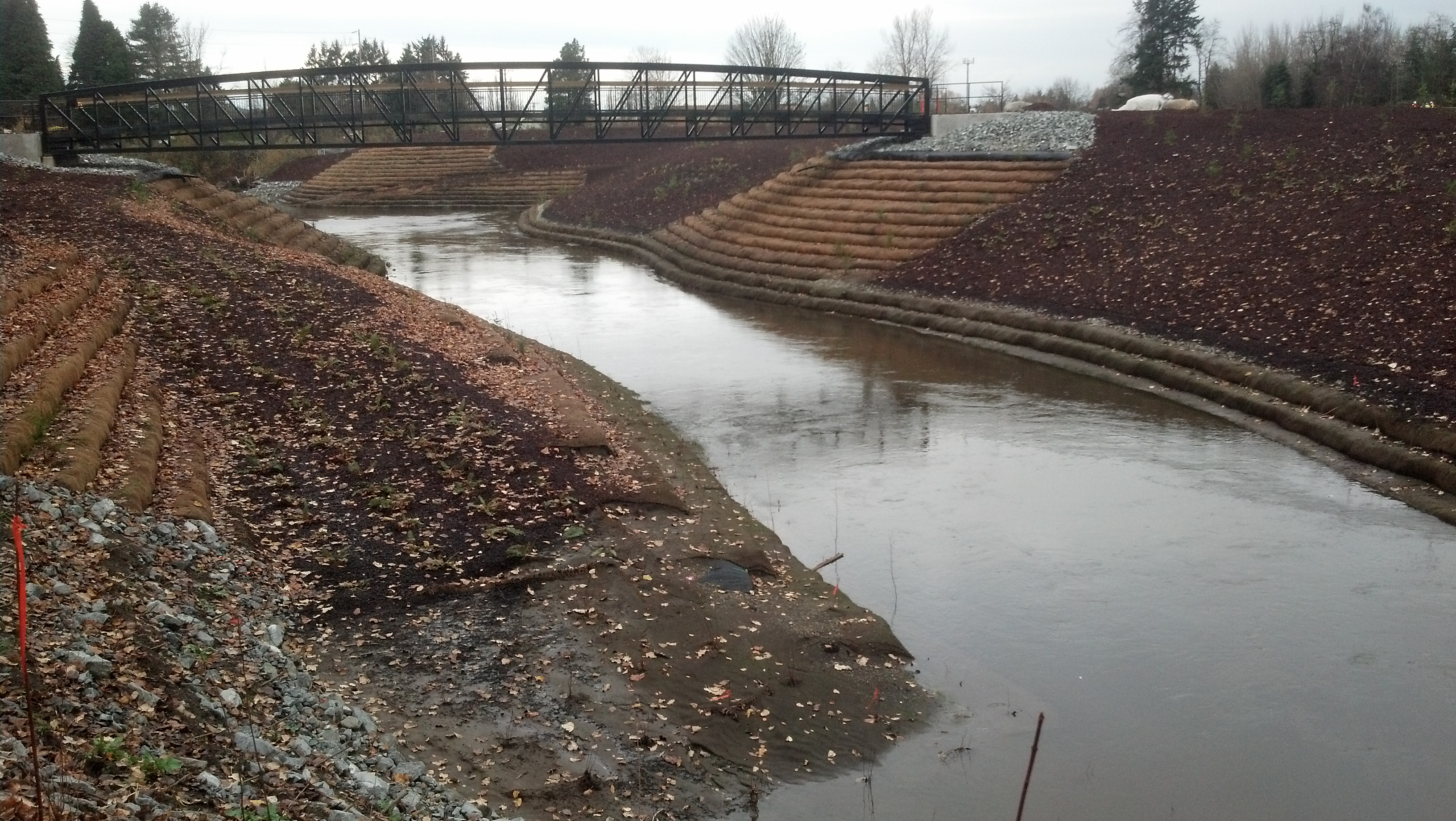
The approximately 125’ long pedestrian bridge is in place. Riverview Park visitors will gain an exceptional view of the new side channel, and access to the island (on the right) between the channel and the Green River. A loop path around the island will meander through meadow and a mature Cottonwood canopy. Native plant restoration along the Green River banks will enhance the existing native riparian corridor.
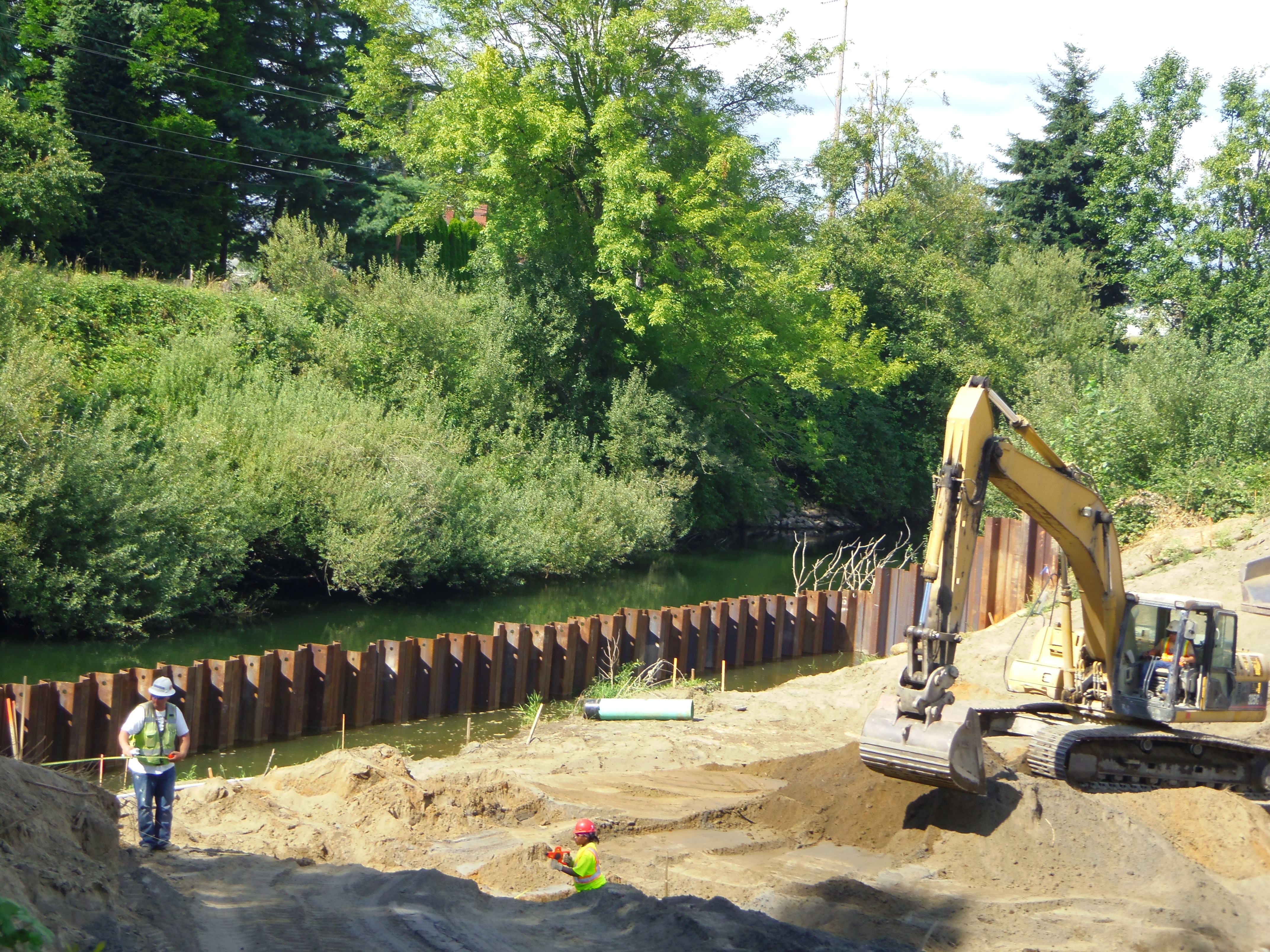
Looking at the channel outlet, you can see the coffer dam. An excavator-operator continues to dig out this area to reach channel bottom grades. PSI continuously dewaters the area behind the coffer dam to keep working conditions nice and dry.
For more information see the Seattle District US Army Corps of Engineers’ webpage.


 Construction is underway for the Entiat Park Revitalization project. Here’s how it looked last week.









 j.a.b.LOG